

By StateLeak Editorial
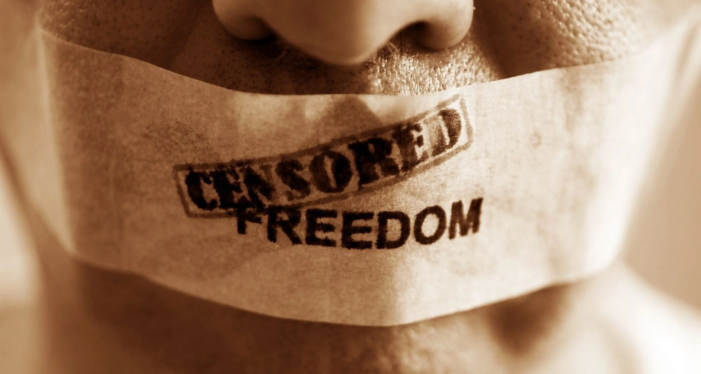
For much of the twentieth century, information control was blunt and visible. Newspapers were shut down, broadcasts were jammed, and journalists were arrested. Today, in many parts of the world, information is rarely silenced so directly. Instead, it is managed — quietly, legally, and often invisibly.
Modern states have learned that outright censorship attracts resistance. Subtle control attracts compliance.
This article examines how governments shape public understanding without banning speech, blocking websites, or openly suppressing journalists.
From Censorship to Management
Traditional censorship relies on force. Modern information control relies on structure.
Rather than asking “How do we stop people from speaking?”, states now ask:
- How do we flood the space with alternative narratives?
- How do we delay uncomfortable facts?
- How do we define which voices sound “credible”?
The result is a system where information technically remains free, yet public understanding becomes increasingly narrow.
The Power of Agenda Setting
One of the most effective tools is not telling people what to think, but what to think about.
Governments influence news agendas through:
- Strategic briefings
- Selective access to officials
- Timed document releases
- Crisis-focused messaging
When attention is constantly directed toward emergencies, personalities, or scandals, structural issues fade into the background. Absence becomes as powerful as presence.
Nothing is banned. It is simply never discussed.
Information Overload as a Weapon
Paradoxically, transparency itself can be used to obscure truth.
Large data dumps, complex reports, and endless policy documents can overwhelm journalists and citizens alike. Important details are buried inside thousands of pages, technically public but practically inaccessible.
When everything is disclosed at once, very little is understood.
Legal Boundaries That Shape Speech
Modern information control is often embedded in law.
Broadly worded regulations covering:
- National security
- Misinformation
- Public order
- Cyber safety
create uncertainty. Journalists may not be told not to publish — they are simply made unsure whether they can.
This uncertainty produces self-restraint. Stories are softened, delayed, or abandoned altogether, not by force, but by fear of legal consequences.
Credentialing Credibility
States increasingly influence which voices appear authoritative.
This is done through:
- Official expert panels
- Preferred think tanks
- Accredited commentators
- Algorithmic amplification via state-aligned messaging
Alternative analysts are not silenced; they are framed as unreliable, fringe, or irresponsible. Over time, audiences learn which perspectives are “safe” to trust.
Credibility becomes a managed resource.
Crisis Narratives and the Suspension of Scrutiny
During crises — wars, pandemics, security threats — information control accelerates.
Emergency framing allows governments to:
- Simplify narratives
- Delay disclosure
- Label questions as harmful or dangerous
Calls for scrutiny are portrayed as distractions or threats to unity. By the time normal debate resumes, key decisions have already been made.
The Role of Media Economics
Information control does not operate in isolation. It is reinforced by economic pressure.
Advertising dependency, platform algorithms, and audience metrics reward speed, emotion, and repetition — not investigation.
Governments do not need to suppress journalism when market incentives already discourage it.
Why This System Is Hard to Detect
Modern information control is effective precisely because it does not feel oppressive.
People can speak, publish, and criticise. The boundaries are psychological rather than physical. Over time, expectations narrow. Certain questions stop being asked.
Freedom exists — but within carefully shaped limits.
The Public Interest Gap
The danger is not that citizens are lied to constantly. It is that they are selectively informed.
Decisions affecting public life are justified through partial truths, delayed facts, and managed narratives. Accountability weakens not because people are ignorant, but because they are never shown the full picture at the same time.
Why Independent Journalism Still Matters
In this environment, the role of investigative journalism is not merely to expose secrets, but to connect fragments.
To ask:
- What information is missing?
- Why was this detail delayed?
- Who benefits from this framing?
Information freedom is not only about access. It is about context.
Conclusion
Modern states rarely need to censor. They manage.
They shape attention, credibility, legality, and urgency — quietly guiding public understanding without visible force. The challenge for citizens and journalists is recognising control that presents itself as normal governance.
True transparency is not measured by how much information is released, but by how much can be meaningfully understood.
StateLeak exists to examine those gaps — calmly, carefully, and in the public interest.
StateLeak publishes independent investigative journalism and analysis focused on state power, secrecy, and global affairs.

How Modern States Control Information Without Censorship added by stateleak on
View all posts by stateleak →
You must be logged in to post a comment Login